Are Google PPC Services The Fastest Way To Reach Potential Customers?
- Jun 7
- 3 min read

In today's digital-first marketplace, businesses are constantly searching for effective ways to reach their target audience and generate conversions. One strategy that continues to deliver measurable results is Google PPC Services. By allowing businesses to connect with users actively searching for products or solutions, this advertising approach has become a valuable component of modern digital marketing.
Understanding Pay-Per-Click Advertising
Pay-per-click advertising is a model where advertisers pay only when a user clicks on their advertisement. Unlike traditional marketing methods that often rely on broad exposure, this approach focuses on reaching individuals who demonstrate clear interest through their online searches.
This targeted method helps businesses maximize their marketing budgets while improving the quality of website traffic.
Why Businesses Choose Paid Search Campaigns
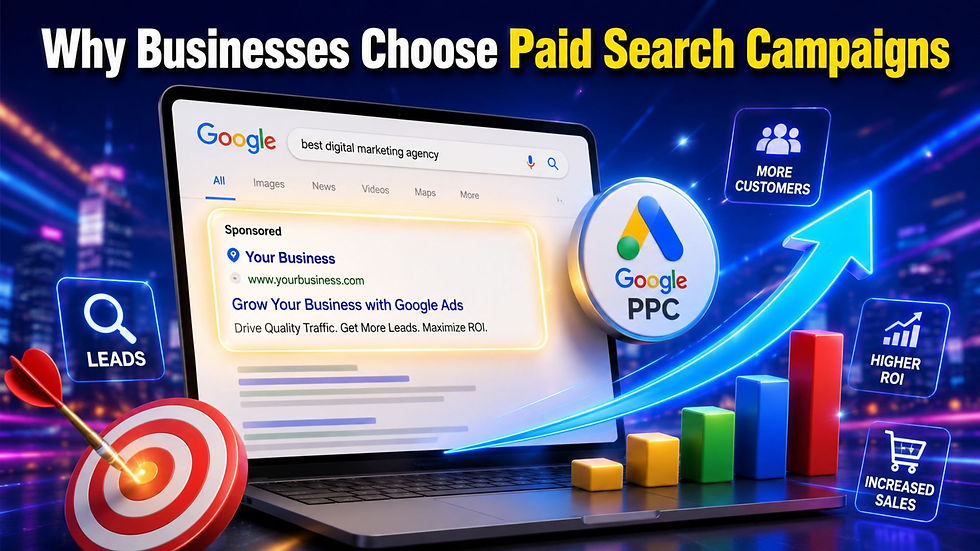
Companies of all sizes invest in paid search because it offers several unique advantages that help marketing brands reach targeted audiences and improve campaign performance.
Immediate Visibility
Search engine optimization often requires time to build authority and rankings. Paid campaigns can place businesses in front of potential customers almost immediately.
Precise Audience Targeting
Advertisers can target audiences based on:
Location
Language
Device type
Search intent
Demographic factors
This precision helps ensure marketing efforts reach the most relevant users.
Budget Control
Organizations can set daily or monthly budgets based on their goals and resources. This flexibility makes paid advertising accessible for both small businesses and large enterprises.
The Importance of Search Intent
One of the greatest strengths of paid search advertising is its ability to capture users at the moment they are actively seeking information.
Search intent generally falls into several categories:
Informational Intent
Users are researching a topic or looking for answers.
Navigational Intent
Users are trying to find a specific website or brand.
Commercial Intent
Users are comparing products or services before making a decision.
Transactional Intent
Users are ready to complete a purchase or take action.
Understanding these behaviors allows marketers to create more effective campaigns and relevant messaging.
Creating High-Performing Advertisements
Successful campaigns rely on more than just visibility. Advertisements must encourage users to engage.
Clear Headlines
A strong headline captures attention and communicates value quickly.
Relevant Messaging
Ad copy should address customer needs and highlight benefits.
Strong Call-to-Action
Effective calls-to-action encourage users to take the next step, whether it is making a purchase, requesting a quote, or learning more.
Consistent Landing Pages
The experience after the click is equally important. Landing pages should align with the message and expectations established by the advertisement.
Measuring Campaign Success

Modern advertising platforms provide detailed performance metrics that help businesses evaluate results and gain insights from Competitor PPC Keywords to improve campaign effectiveness.
Common indicators include:
Click-through rate
Conversion rate
Cost per click
Return on investment
Customer acquisition cost
By monitoring these metrics regularly, businesses can identify opportunities for improvement and optimize campaign performance.
The Role of Data in Decision-Making
Data-driven marketing has become essential for achieving consistent results.
Performance data helps organizations:
Identify high-performing keywords
Improve audience targeting
Refine advertising messages
Allocate budgets effectively
Increase conversion opportunities
This continuous optimization process contributes to long-term campaign success.
Benefits for Small and Growing Businesses
Paid search advertising is not limited to large corporations.
Smaller businesses can benefit by:
Competing in local markets
Generating qualified leads
Building brand awareness
Driving website traffic
Reaching customers during key decision-making moments
With careful planning and ongoing optimization, smaller organizations can achieve meaningful results even with modest budgets.
Adapting to a Changing Digital Landscape
Consumer behavior and search patterns continue to evolve. Businesses that regularly review campaign performance and adjust their strategies are often better positioned to remain competitive.
Staying informed about audience preferences, industry trends, and technological developments helps organizations maintain effective advertising efforts over time.
You can also watch: Revolutionize Advertising with AI-Based Ad Intelligence Tool - PowerAdSpy.
Conclusion
As competition continues to increase across digital channels, Google PPC Services remain an effective solution for businesses seeking visibility, targeted traffic, and measurable outcomes. When combined with strategic planning, audience understanding, and continuous optimization, this approach can support sustainable growth and help organizations achieve their marketing objectives more efficiently.
FAQs:
1. What is pay-per-click advertising?
It is a digital advertising model where businesses pay only when users click on their advertisements.
2. Why is audience targeting important?
Targeting helps businesses reach users who are most likely to be interested in their products or services.
3. How quickly can paid campaigns generate results?
Paid campaigns can often begin generating visibility and traffic shortly after launch.
4. What metrics should businesses monitor?
Important metrics include click-through rate, conversion rate, cost per click, and return on investment.
5. Can small businesses benefit from paid search advertising?
Yes. Small businesses can use targeted campaigns to attract qualified leads and compete effectively in local markets.


Comments